
Common Mistakes When Washing Heavy Blankets and Sleeping Bags at a Laundromat
Washing heavy comforters or technical sleeping bags at home often leads to broken machines or ruined fabrics. According to textile care experts, using the wrong equipment can reduce the lifespan of down insulation by up to 30 percent due to improper agitation. This guide outlines the critical errors to avoid and the correct procedures for using commercial-grade laundromat equipment to restore your bedding safely. (Commercial Services Lumin Laundry)
Choosing the Right Machine Size
The most frequent error is underestimating the volume required for heavy textiles. A standard residential washer often lacks the drum capacity to allow heavy blankets to move freely. When a blanket is too tight, it cannot agitate properly, leading to uneven cleaning and potential machine strain. (Pricing Lumin Laundry)
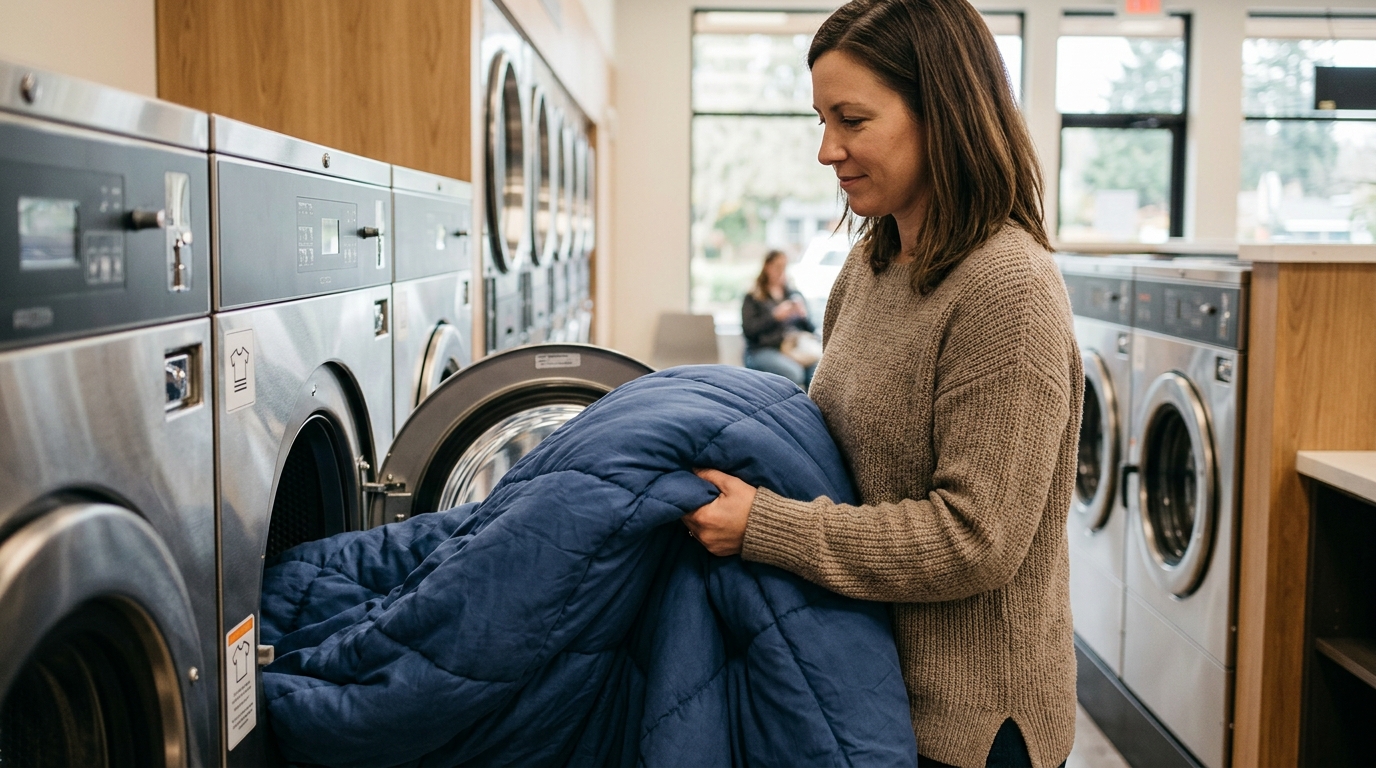
At Lumin Laundry, we utilize a range of commercial washers from 18 pounds to 80 pounds. Heavy comforters and king-size sleeping bags require the 40-pound or 60-pound machines. These larger drums provide the necessary space for water and detergent to circulate around the entire item. Using a smaller machine forces the fabric to bunch up, creating dense pockets that never get clean.
Another common mistake is overloading the machine. Even in a large commercial unit, you must leave enough room for the blanket to tumble. If the machine struggles to spin or makes a thumping noise, stop the cycle immediately. This indicates the load is too heavy for the current spin speed.
Detergent and Fabric Softener Mistakes
Using the wrong cleaning agents is a critical error that damages both the fabric and the insulation. Many consumers use standard household detergents that are too harsh or leave heavy residues. Always use a mild, liquid detergent specifically designed for delicate or technical fabrics.
Avoid fabric softeners at all costs. Fabric softener coats the fibers of down and synthetic fills, reducing their ability to loft and trap heat. This residue also attracts dirt, causing the blanket to become dirty faster after washing. For sleeping bags, this is particularly damaging as it compromises the thermal efficiency of the gear.
Another error is using too much detergent. Excess suds do not clean better; they actually trap dirt and are difficult to rinse out of heavy fabrics. In a commercial setting, our high-speed extraction machines help remove excess suds, but starting with the correct amount is vital. We recommend using half the standard dose for heavy items to ensure a thorough rinse.
The Drying Process and Moisture Traps
Drying heavy blankets is often more difficult than washing them. The primary mistake is using high heat for too long. High heat can scorch synthetic fibers and damage the natural oils in wool or down. Use low heat or air-only settings to protect the integrity of the fill.
Another critical error is failing to dry the item completely. Damp blankets stored in closets can develop mildew and unpleasant odors within days. To prevent this, use tennis balls or clean dryer balls in the dryer. These balls help break up clumps of down or synthetic fill, ensuring even drying and restoring loft.
Patience is required during the drying phase. Heavy items can take several hours to dry fully. Check the blanket every 30 minutes to fluff it and redistribute the fill. If you notice any damp spots, continue drying until the item is completely dry to the core. Rushing this process is the leading cause of mold growth in stored bedding.
Preserving Down and Synthetic Fill
Down and synthetic fills require different care approaches. Down is a natural material that needs gentle handling to maintain its loft. Synthetic fills, often found in sleeping bags, are more durable but can melt under high heat. Always check the care label before washing to determine the fill type.
For down items, use a down-specific detergent to help restore the natural oils. For synthetic sleeping bags, avoid bleach and harsh chemicals that can degrade the water-resistant coatings. Washing these items separately from other laundry prevents cross-contamination and ensures the fill is not disturbed by zippers or hooks from other clothes.
Another common mistake is neglecting to rinse thoroughly. Residual detergent can attract pests and cause skin irritation. Our commercial machines offer extended rinse cycles to ensure all soap is removed. If you are washing at home, consider an extra rinse cycle to achieve the same result.
Why Commercial Machines Are Superior
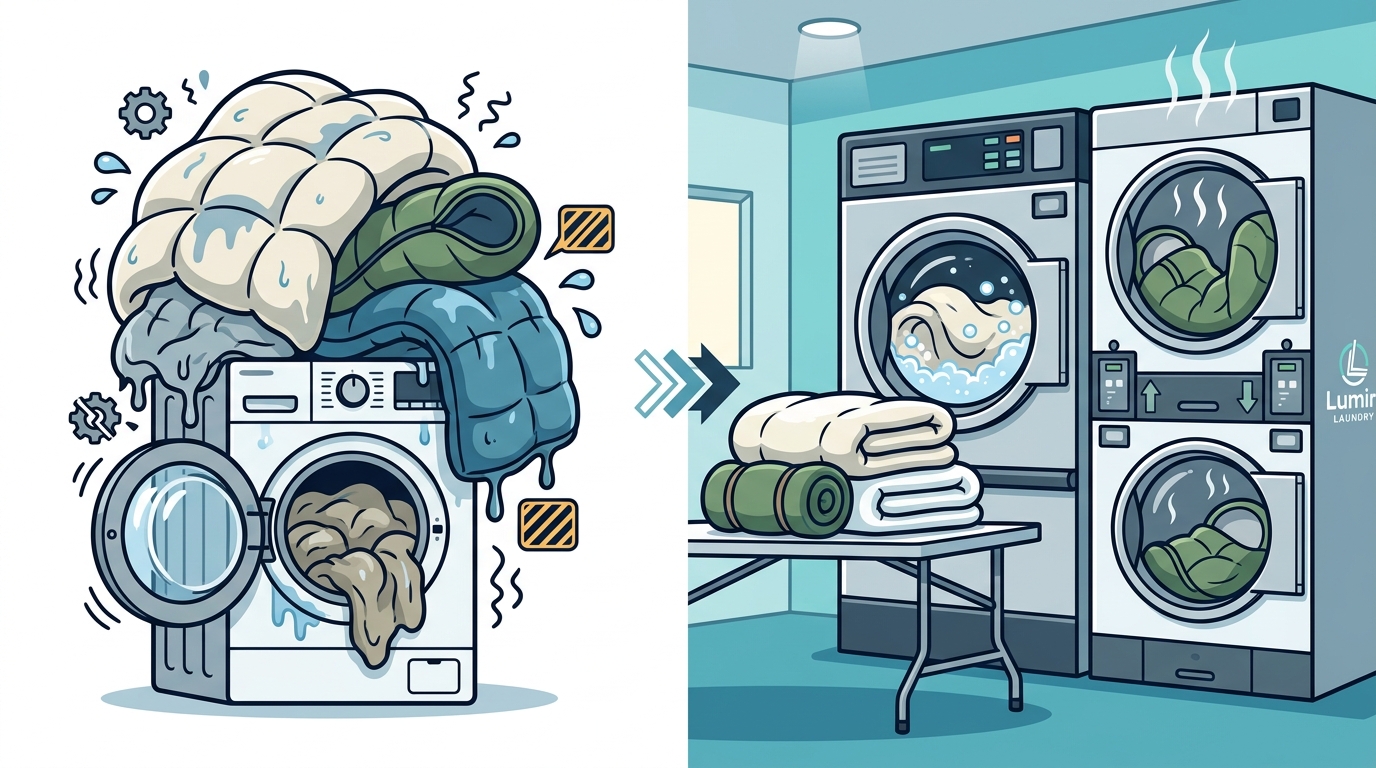
Home washers often lack the power to handle heavy textiles effectively. Commercial machines, such as the Electrolux units at Lumin Laundry, feature high-velocity spin cycles that remove more water than residential models. This reduces drying time and energy costs significantly.
Our 450G extraction rate is a key advantage. This high spin speed forces water out of the dense fibers of heavy blankets, leaving them damp but not soaking wet. This efficiency is difficult to replicate with standard home equipment. Additionally, our machines are designed to handle the weight and volume of large items without straining the motor.
The environment at a laundromat also offers benefits. Our climate-controlled spaces ensure consistent drying conditions. We also provide specialized detergents and dryer balls for customer use. By using commercial-grade equipment, you ensure that your heavy blankets and sleeping bags are cleaned safely and efficiently.
Key Takeaways
- Use a 40-pound or larger commercial washer for heavy blankets to allow proper agitation.
- Avoid fabric softeners as they coat fibers and reduce the loft of down and synthetic fills.
- Dry on low heat with dryer balls to prevent clumping and ensure even moisture removal.
- Ensure items are completely dry to prevent mildew and odor development during storage.
- Commercial machines with high extraction rates reduce drying time and protect fabric integrity.
- Use mild, liquid detergents specifically formulated for delicate or technical fabrics.
- Check care labels to distinguish between down and synthetic fill requirements.
Frequently Asked Questions
Can I wash a king-size comforter in a laundromat?
Yes, but you must use a 40-pound or larger commercial washer. Smaller machines will not allow the comforter to move freely, leading to incomplete cleaning.
How do I prevent down clumping in the dryer?
Add clean tennis balls or dryer balls to the dryer. These help break up clumps and restore the loft of the down insulation during the drying process.
Is it safe to use high heat for synthetic sleeping bags?
No, high heat can melt synthetic fibers and damage water-resistant coatings. Use low heat or air-only settings to protect the fabric.
Why do I need a commercial washer for heavy blankets?
Commercial washers have larger drums and more powerful motors. They provide the necessary space for agitation and the extraction power to remove excess water efficiently.
What detergent should I use for down items?
Use a mild, liquid detergent designed for delicate fabrics or a specific down wash. Avoid harsh chemicals and bleach.
How long does it take to dry a heavy blanket at a laundromat?
Drying time varies based on the machine and load size, but it typically takes two to three hours. Using high-extraction spin cycles can reduce this time significantly.
Can I wash my sleeping bag with other clothes?
No, always wash sleeping bags and heavy blankets separately. Zippers and hooks from other clothes can damage the delicate fabrics and fills.
Ready to Clean Your Heavy Textiles?
Don't risk your home machine or your valuable bedding. Visit Lumin Laundry in Shoreline, WA, to experience our state-of-the-art commercial equipment. Our team is ready to help you wash and dry your heavy blankets and sleeping bags safely and efficiently. Schedule your pickup or visit us today to get started.