
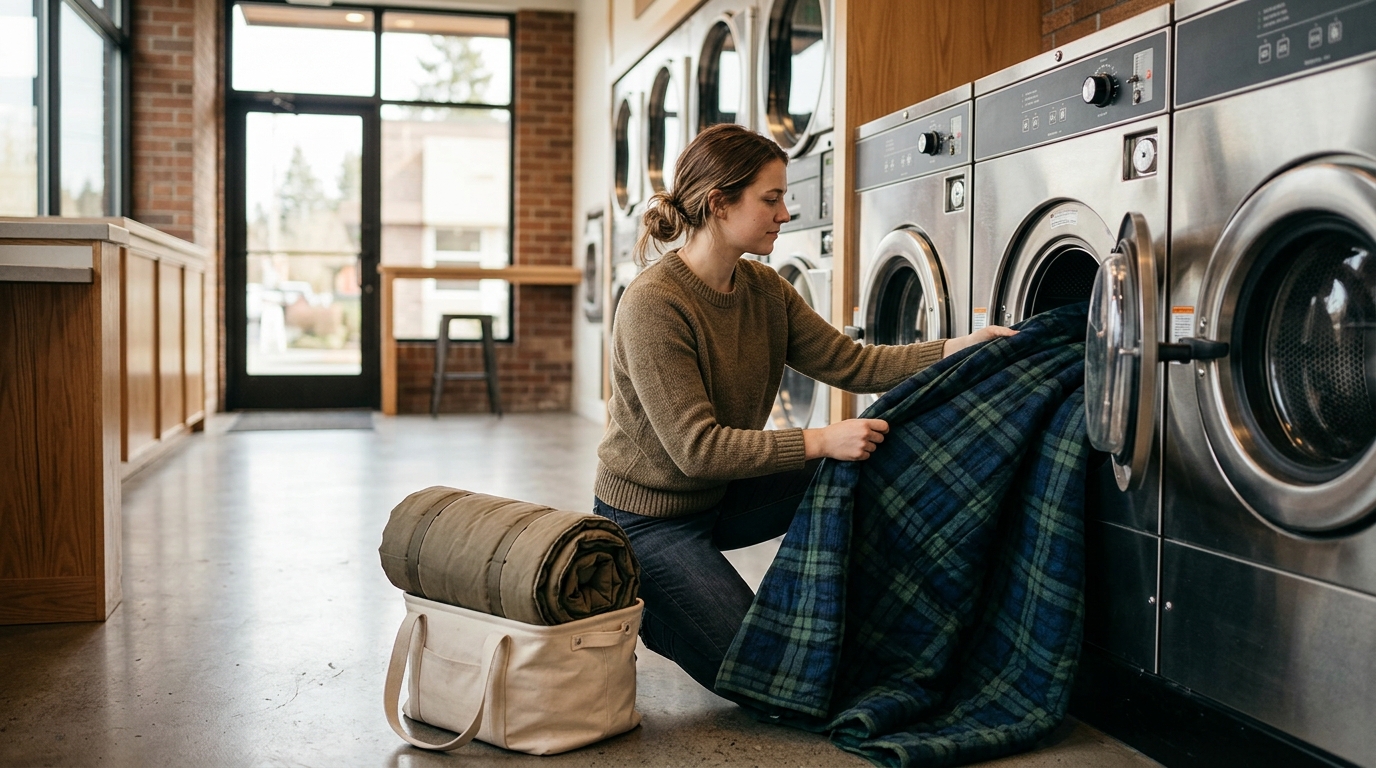
Washing bulky items like heavy comforters or camping sleeping bags at home is often a recipe for broken machines and ruined fabrics. According to recent industry data, over 60% of residential washer damage is linked to unbalanced loads caused by oversized textiles. At Lumin Laundry in Shoreline, WA, we have engineered our facility specifically to handle these high-volume challenges safely and efficiently. This guide will walk you through the exact process of using our commercial-grade equipment to restore your bedding and gear without the risk.
Understanding the Right Machine Size
The most critical factor in washing heavy blankets is machine capacity. Standard home washers typically hold 4 to 5 cubic feet of volume. In contrast, our facility features industrial Electrolux machines with capacities ranging from 18 pounds to 80 pounds. Understanding the pound rating is essential for success.
Each 10 to 12 pounds of capacity equals approximately one standard load of laundry. Our 45-pound machines can handle approximately four loads at once, making them ideal for king-size comforters or large duvets. For sleeping bags, which are dense and absorb significant water, the 60-pound or 80-pound washers are the only safe options. Using a machine that is too small will cause the motor to burn out or the drum to become unbalanced, triggering an automatic stop.
We recommend checking our Self-Service Laundry page for a detailed breakdown of our specific machine inventory. Our 40 and 60-pound machines are specifically designed to clean and sanitize large bedding items like blankets, comforters, and duvets without straining the equipment.
Preparation Checklist Before You Arrive
Proper preparation ensures that your heavy items come out clean and odor-free. Before you head to our Shoreline location at 20154 Ballinger Way NE, follow these steps:
1. Check Care Labels
Always inspect the tag on your sleeping bag or blanket. If it specifies "Dry Clean Only," do not attempt to wash it in a laundromat. However, most synthetic sleeping bags and cotton blends are machine washable. Never use fabric softener on sleeping bags, as it coats the fibers and destroys their loft and moisture-wicking properties.
2. Pre-Treat Stains
Heavy blankets often accumulate body oils, sweat, and dust mites. Apply a small amount of liquid detergent directly to stained areas and let it sit for 15 minutes. This pre-treatment helps break down the grime before the main wash cycle begins.
3. Balance the Load
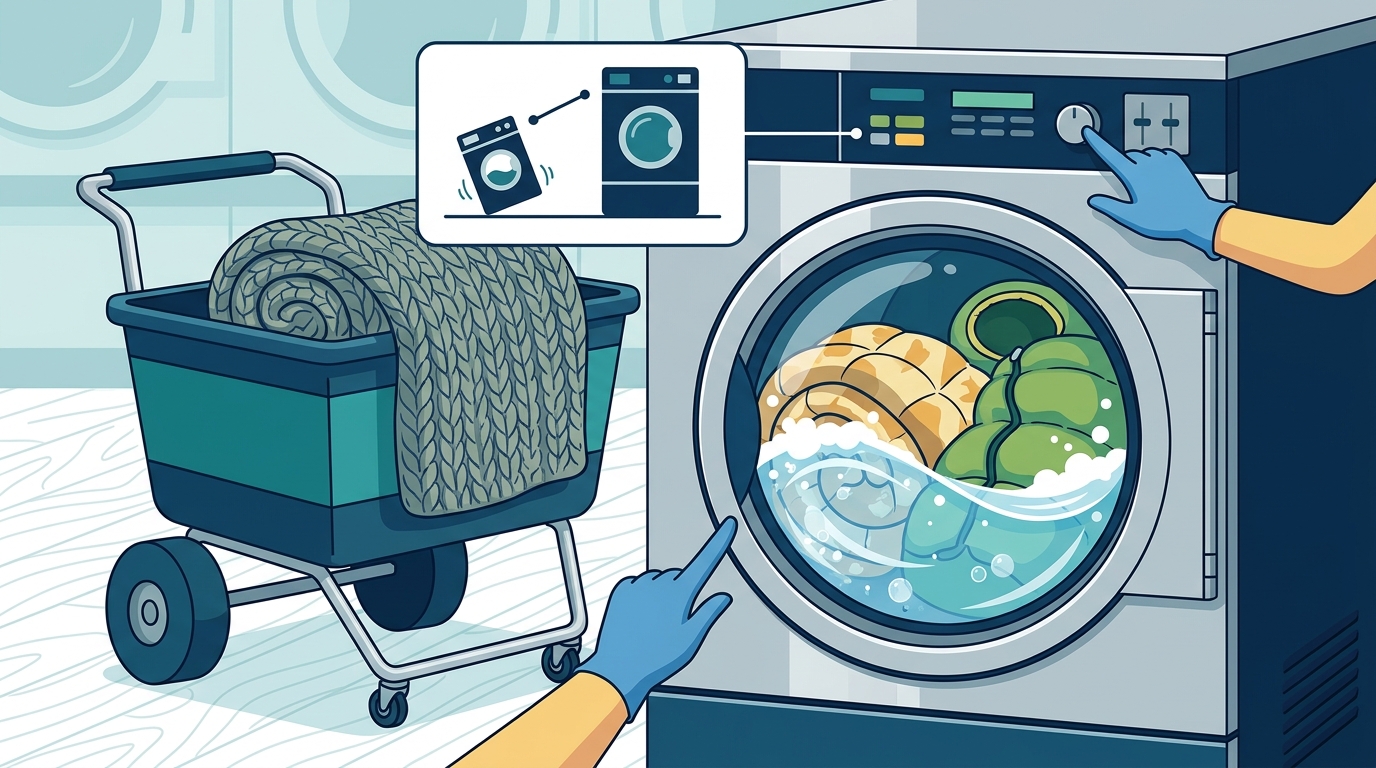
When loading your heavy blanket, ensure it is distributed evenly around the drum. If the load is too small for the large machine, it may not agitate properly. If it is too large, it will not clean. Our friendly staff is always available to help you determine the right machine size for your specific item.
The Washing Process: Cycle Selection
Once you have loaded your item into the appropriate washer, selecting the correct cycle is vital. Our high-speed Electrolux machines feature revolutionary 450G extraction, which saves both time and money in both washing and drying.
Water Temperature
Use hot water for cotton blankets and synthetic sleeping bags to kill dust mites and bacteria. Cold water is generally insufficient for sanitizing heavy textiles. If you are washing a down-filled comforter, use warm water to protect the natural oils in the down feathers.
Detergent Dosage
Heavy items require more detergent than regular loads, but overuse can lead to residue buildup. Use a high-efficiency (HE) detergent and follow the dosage guidelines for large loads. You can use your own detergent or purchase ours in-store. For those who prefer not to bring their own supplies, we offer a range of laundry products.
The Rinse Cycle
Heavy blankets trap soap easily. We recommend selecting an extra rinse cycle if available. This ensures that all detergent is flushed out, preventing the stiff, crunchy texture that often plagues home-washed bedding.
Drying Strategies for Fluffiness
Drying is where most people fail. Heavy blankets retain massive amounts of water, making them extremely heavy and slow to dry. Our facility has 42 dryers, including large-capacity units designed for bulky items.
Use Tennis Balls or Dryer Balls
For sleeping bags and down comforters, add three to four clean tennis balls or wool dryer balls to the dryer. These balls bounce around the drum, breaking up clumps of down or fabric and restoring loft. This technique is crucial for maintaining the insulation properties of your gear.
Low Heat Setting
Always use a low or medium heat setting. High heat can damage synthetic fibers in sleeping bags and shrink cotton blankets. If your sleeping bag is made of nylon or polyester, excessive heat can melt the fabric or damage the waterproof coating.
Patience is Key
Do not rush the drying process. A king-size comforter may take two or more full dryer cycles to become completely dry. If you remove it while even slightly damp, it will develop a mildew odor within hours. Our Laundry Experts recommend checking the item thoroughly before removing it from the dryer.
Commercial Services vs. DIY
While washing heavy items yourself is possible, it requires time, effort, and the right equipment. For those who prefer a hands-off approach, Lumin Laundry offers professional Wash & Fold and Pick Up & Delivery services.
| Feature | DIY at Lumin Laundry | Professional Wash & Fold |
|---|---|---|
| Cost | Approx. $5-$12 per wash + dryer fees | Price per pound (varies by item size) |
| Effort | High (Loading, monitoring, folding) | Zero (We handle everything) |
| Turnaround | Same day (if you stay) | Next day or scheduled delivery |
| Expertise | Depends on your knowledge | Professional fabric care |
Our commercial services are particularly beneficial for businesses or individuals with multiple heavy items. We use specialized industrial equipment that is more powerful than any consumer-grade machine, ensuring a deeper clean and longer lifespan for your textiles.
Key Takeaways
- Machine Capacity Matters: Use 45-pound or larger washers for heavy blankets and sleeping bags to prevent machine damage.
- No Fabric Softener: Avoid fabric softener on sleeping bags as it destroys loft and moisture-wicking capabilities.
- Extra Rinses: Use an extra rinse cycle to remove all detergent residue from dense fabrics.
- Dryer Balls: Use tennis balls or wool dryer balls to restore fluffiness and prevent clumping.
- Low Heat Drying: Always use low heat to protect synthetic fibers and down feathers.
- Complete Dryness: Ensure items are 100% dry to prevent mildew and odors.
- Professional Options: Consider our Wash & Fold or Pickup & Delivery services for hassle-free laundry care.
Frequently Asked Questions
How much does it cost to wash a heavy blanket?
The cost depends on the machine size and cycle length. You can expect to spend approximately $5 to $12 per wash cycle and $4 to $6 per dryer load. Larger machines for king-size items will be at the higher end of this range.
Can I wash a down sleeping bag in a laundromat?
Yes, but you must use a large capacity washer (60lb or 80lb) and a gentle cycle with cold or warm water. Never use hot water, and always use a specialized down wash detergent. Dry on low heat with tennis balls to restore loft.
What is the largest washer available at Lumin Laundry?
We have 80-pound washers available, which are ideal for king-size comforters, large duvets, and bulky camping gear. These machines provide the necessary volume to prevent unbalanced loads.
Do you offer dry cleaning for heavy blankets?
We do not currently offer dry-cleaning services. However, our industrial washers and dryers provide a deep clean that is often superior to home washing for most textiles.
How do I know if my blanket is too heavy for the machine?
If you cannot easily lift the item into the drum, or if it fills the drum completely when dry, it is likely too heavy. Our staff can assist you in selecting the correct machine size to ensure a safe wash.
Can I use my own detergent?
Yes, you are welcome to use your choice of detergent. We also sell high-efficiency detergents and fabric softeners in-store if you forget yours.
What are your hours for self-service laundry?
Our self-service laundry is open Monday through Friday from 8:00 a.m. to 9:00 p.m., and Saturday through Sunday from 7:00 a.m. to 9:00 p.m. Last wash must begin by 7:30 p.m.
Ready to Simplify Your Laundry Day?
Stop struggling with bulky items in your home washer. Visit Lumin Laundry in Shoreline, WA, for a modern, high-tech laundry experience. Whether you choose to wash your heavy blankets yourself or let our expert team handle it with our Wash & Fold service, we guarantee a superior clean. New customers can enjoy 20% off their first pickup order using code NEW20. Schedule your pickup today and experience the difference of professional laundry care.